What Materials Are Used in Cable Harness Manufacturing
Cable harnesses are manufactured using copper wires for conductivity, often insulated with materials like PVC for general use or specialized Teflon for high-temperature resistance up to 200°C. The bundles are bound with sleeves, loom, or tape, and include connectors and terminals made from brass or gold-plated contacts. Strain relief components are molded from nylon or vinyl to protect connection points from pulling and vibration.
Conductors: Copper and Aluminum
Copper remains the dominant choice, accounting for approximately 60-70% of all conductors in harnesses due to its superior conductivity. However, aluminum is a strong competitor in high-volume, cost-sensitive applications like automotive wiring, where its lighter weight—about 30% less than copper for the same resistance—translates directly into improved vehicle efficiency. The choice between them hinges on a precise balance of electrical needs, mechanical demands, and budget constraints, often calculated down to cost per meter.
The primary job of a conductor is to move electrical current with minimal resistance, which is measured in ohms per meter (Ω/m). Copper (Cu) is the industry standard because it offers the best all-around performance. Its electrical conductivity is approximately 58.0 × 10⁶ Siemens per meter (S/m) at 20°C. For most low-voltage signal wires, you'll find fine strands of copper with a diameter between 0.05 mm and 0.5 mm. For power applications, thicker solid or stranded conductors are used, with cross-sectional areas ranging from 0.5 mm² to over 100 mm² to handle currents from a few milliamps (mA) to hundreds of amps (A). A key metric is the current-carrying capacity (ampacity), which for a common 2.5 mm² copper wire is typically around 24 Amps in free air at 25°C. This capacity decreases by about 15-20% when bundled in a harness due to reduced heat dissipation.
While excellent, copper has two main drawbacks: cost and weight. The price of copper can fluctuate but often sits around 9,000 per metric ton. This is where aluminum (Al) becomes a viable alternative. Aluminum has about 61% of the conductivity of copper. This means to achieve the same low resistance, an aluminum conductor must have a cross-sectional area about 1.6 times larger than its copper equivalent. For example, a 10 Amp circuit might use a 1.5 mm² copper wire, but would require a 2.5 mm² aluminum wire.
The major advantage of aluminum is its weight and cost. It is about 70% lighter than copper, a critical factor in aerospace and automotive manufacturing where reducing a vehicle's weight by just 10 kg can lead to measurable gains in fuel efficiency. Crucially, aluminum is significantly cheaper, often costing 30-50% less per unit length than a copper wire of equivalent resistance. This makes it the material of choice for large-gauge power cables in cars and for main power feeders in some industrial equipment.
Insulation: PVC and Other Plastics
Polyvinyl Chloride (PVC) is the most common insulation material, used on an estimated 70-80% of all wires in consumer and industrial cable harnesses due to its extremely low cost and flexibility. However, no single material fits every application. Extreme temperatures, chemicals, or mechanical abrasion demand specialized plastics like polyethylene (PE) or fluoropolymers, which can cost 5 to 10 times more than standard PVC but are essential for reliability in harsh environments.
The core function of insulation is to resist electrical current, quantified by its Dielectric Strength, measured in volts per mil (1 mil = 0.001 inch). A good insulator must also manage heat, resist chemicals, and remain flexible. The choice of material is a direct trade-off between performance, durability, and cost per meter.
PVC (Polyvinyl Chloride) dominates because it strikes a balance. It typically costs 1.50 per kilogram, making it the cheapest option. It's flexible, with a good dielectric strength of around 500-600 volts per mil, and can operate continuously at temperatures up to 80-105°C. Its flexibility comes from adding plasticizers, typically 20-35% by weight. However, these can migrate over 5-7 years, causing the insulation to become brittle, especially in high-temperature environments. PVC also has poor resistance to oils and fuels, which can cause swelling and a 20-30% reduction in insulating properties over time.
For higher temperatures or better environmental resistance, engineers turn to other materials. A common step-up is Cross-Linked Polyethylene (XLPE). Through a chemical or physical cross-linking process, XLPE can handle continuous temperatures of 90-125°C and has superior resistance to abrasion. Its dielectric strength is higher, around 700-800 volts per mil. The trade-off is cost: XLPE wire can be 20-50% more expensive than equivalent PVC wire.
Shielding: Foil and Braided Types
In an electrically noisy world, shielding is what keeps signals clean. Without it, electromagnetic interference (EMI) and radio frequency interference (RFI) can corrupt data, causing errors in everything from medical devices to automotive sensors. Approximately 35-40% of all cables in a complex harness require some form of shielding. The two primary types are foil and braid, each offering a distinct balance of performance, flexibility, and cost, with coverage ranging from 60% to over 95%.
Shielding works by creating a conductive barrier that either reflects or absorbs electromagnetic energy, protecting the internal conductors. Its effectiveness is quantitatively measured as Shielding Effectiveness (SE), expressed in decibels (dB). For example, an SE of 60 dB means the shield reduces the intensity of an interfering signal by a factor of 1,000,000. The choice between foil and braid hinges on the required SE, frequency range, and mechanical durability.
Foil Shields are typically made from a thin layer of aluminum, often 0.002 to 0.005 inches (0.05 - 0.127 mm) thick, laminated to a polyester or polypropylene carrier film for strength. This construction makes them very lightweight and flexible, allowing for a smaller overall cable diameter. Their key advantage is 100% coverage against high-frequency interference (above 100 MHz), as there are no gaps in the conductive layer. A common foil shield might provide 50-60 dB of attenuation at 100 MHz. However, foil is mechanically fragile. It can tear during installation if bent below a minimum bend radius of approximately 4 times the cable diameter, and its DC resistance is relatively high (around 2.5 ohms per 100 meters). This makes it a poor choice for draining static electricity or serving as a ground path. Foil shields are cost-effective, typically adding 0.15 per meter to the cable's cost.
Braided Shields consist of a mesh of woven tinned copper or bare copper strands. The performance is defined by two parameters: density and material. A standard braid coverage is 80-95%, with higher coverage providing better protection. The number of carriers (groups of strands) and picks (crossings per inch) determine this; a common configuration is 16 carriers with 4 picks per inch. Braid offers superior mechanical strength, able to withstand thousands of flex cycles without failure, and has a very low DC resistance (often less than 2.5 milliohms per meter), making it excellent for grounding. Its primary limitation is that its effectiveness declines at very high frequencies (> 500 MHz) because the wavelength of the interference becomes small enough to pass through the gaps in the weave. A high-density (95%) braid might provide 70-80 dB of attenuation at 10 MHz, but this may drop to 40-50 dB at 1 GHz. This robustness comes at a price, adding 0.50+ per meter to the cable cost, making it 2-4 times more expensive than foil.
For the most demanding environments, a combination of both foil and braid is used. This hybrid approach can achieve SE values of 90-100 dB or more across a broad frequency spectrum from 10 MHz to 3 GHz. The braid handles low-frequency interference and provides mechanical strength and grounding, while the foil layer blocks high-frequency noise. This solution, however, is the most expensive and least flexible, adding 1.00+ per meter.
|
Shield Type |
Typical Coverage |
Shielding Effectiveness (SE) |
Cost Add ($/meter) |
Best For |
|---|---|---|---|---|
|
Foil (Aluminum) |
100% |
~60 dB @ 100 MHz |
0.05 - 0.15 |
High-frequency data cables (e.g., CAT6), lightweight applications |
|
Braided (Copper) |
80% - 95% |
~75 dB @ 10 MHz |
0.20 - 0.50 |
Low-frequency power, rugged environments, requires robust grounding |
|
Foil + Braid |
>100% |
>90 dB (broad spectrum) |
0.60 - 1.00+ |
Extreme noise environments (military, aerospace, industrial) |
The decision is a technical and economic calculation. Specifying a combination shield for a 20-meter cable run in a factory robot adds 20 to the harness cost. If the environment's EMI is measured at only 40 dB, this is over-engineering. Conversely, using a simple foil shield in a 10 kW motor drive cabinet, where noise levels can exceed 80 dB, would guarantee signal integrity failures. The shield is a precisely engineered component, selected based on quantifiable environmental noise data.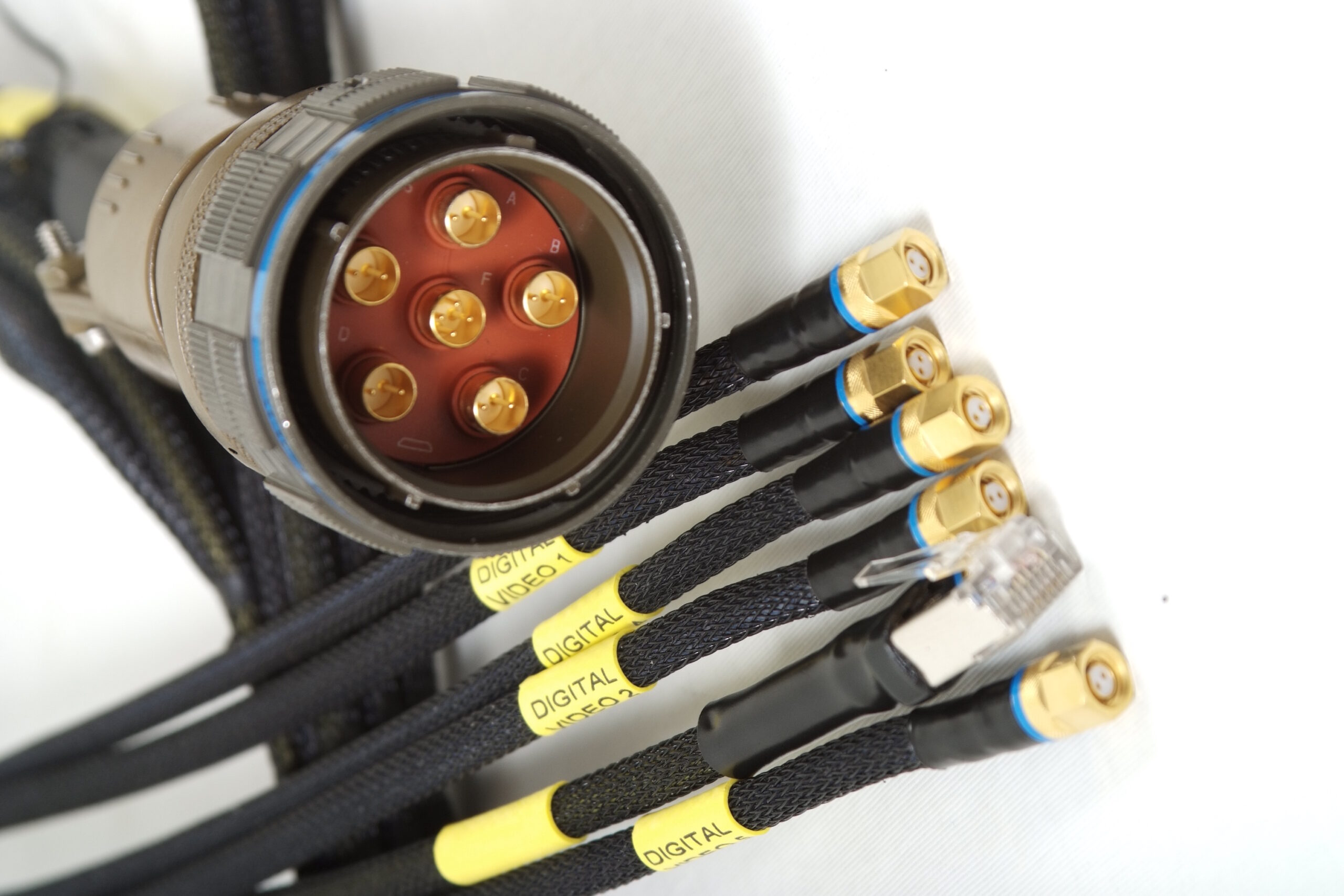
Connectors and Terminals
Connectors and terminals are the critical interface points in any cable harness, where electrical continuity and system reliability are truly tested. A single poor connection can render an entire assembly useless. Over 50% of harness failures originate at termination points. The market offers thousands of variants, but they can be broken down by key performance characteristics:
-
Cost: Basic automotive connectors start at 50.00.
-
Current Rating: Ranges from <1 Amp for signal pins to >100 Amps for heavy-duty power connections.
-
Durability: Measured in mating cycles, from a few hundred for consumer electronics to over 10,000 cycles for industrial equipment.
-
Environmental Sealing: Ingress Protection (IP) ratings, from none (IP00) to fully submersible (IP68/IP69K).
Selecting the right connector is a multi-variable optimization problem balancing electrical needs, mechanical demands, and total applied cost. The first decision is often pin count and spacing. For signal transmission, common 0.100-inch (2.54 mm) or 0.050-inch (1.27 mm) pitch connectors pack 10 to 50 pins into a small footprint. Power connectors require wider spacing, such as 5.08 mm or 7.62 mm, to prevent arcing and manage heat dissipation from currents exceeding 15 Amps per pin. The material of the terminal itself is usually a copper alloy, such as phosphor bronze or brass, often plated with 2-5 microns of tin or 0.5-1.5 microns of gold to ensure low contact resistance (target < 5 milliohms) and prevent oxidation over a 15-20 year service life.
The method of termination is equally critical. Crimp termination is the dominant method, accounting for roughly 80% of all connections due to its speed and reliability. A proper crimp is quantified by its pull-out force. For a 20 AWG wire, a good crimp must withstand a pull force of >50 Newtons (N). Under-crimping can reduce this to <20 N, leading to connection failure from vibration. Over-crimping can compress the wire strands by over 30%, causing fatigue and breaking. Automated crimping machines achieve a process accuracy with a CpK > 1.67, ensuring virtually every termination is within specification. The cost of these machines ranges from 50,000, but they reduce termination time to <2 seconds per wire and eliminate human error, paying for themselves on production runs of >50,000 units.
Protective Sleeving and Tapes
While wires and connectors form the electrical core of a harness, protective sleeving and tapes are the unsung heroes that ensure its long-term physical survival. They guard against abrasion, heat, moisture, and chemicals, directly impacting the harness's lifespan. Abrasion is a leading cause of harness failure in dynamic applications, and the right protection can increase mean time between failures (MTBF) by 200% or more. The global market for these materials exceeds 0.02 per meter to specialized silicone fiberglass sleeving costing over $5.00 per meter.
The selection of protective materials is a direct response to quantifiable environmental stressors. The primary considerations include abrasion resistance, temperature range, flexibility, and chemical exposure. A common metric for abrasion resistance is the Taber Abrasion test (CS-10 wheel, 1kg load), where a good quality nylon sleeving might withstand 10,000 cycles before failure, while a standard polyolefin heatshrink may only last 2,000 cycles. Temperature tolerance is another key driver. Materials must be chosen based on the peak temperatures the harness will encounter, not just the ambient temperature. For example, in an engine bay, temperatures can spike to 150°C, requiring materials rated for continuous exposure at that level.
The main types of protection can be broken down by form and function:
-
Braid Sleeving: Often made from polyester or nylon, this expandable sleeving provides excellent abrasion protection and is highly flexible. It adds minimal bulk, with a typical wall thickness of 0.3mm to 0.5mm, but offers limited protection from fluids.
-
Heat-Shrink Tubing: This material radially contracts by 30-50% when heated to 120°C, forming a tight, environmental seal. Dual-wall adhesive-lined heat shrink contains a layer of meltable adhesive that flows to create a waterproof, IP67-rated seal. Standard tubing shrinks in 30-60 seconds with a heat gun.
-
Spiral Wrap: A plastic tape wound into a spiral, allowing for easy access to wires inside. It is the fastest to install, with a typical application speed of 15-20 meters per hour, but provides the least protection from liquids and fine contaminants.
-
Wrapping Tapes: These include PVC, cloth, and specialty films. They are used for bundling, marking, and adding a layer of minor abrasion protection. Their holding power is measured in N/cm (Newtons per centimeter of width).
The cost and performance differences between these options are substantial. Using a high-end material where it isn't needed wastes budget, but under-specifying leads to premature failure. The choice is guided by hard data on the operating environment.
|
Material Type |
Typical Cost/meter |
Max Temp. Range |
Key Strength |
Key Weakness |
|---|---|---|---|---|
|
PVC Tape |
0.05 |
-40°C to 105°C |
Low cost, conformable |
Low abrasion resistance, plasticizer migration |
|
Polyester Braid |
0.40 |
-40°C to 125°C |
Excellent flexibility, good abrasion |
Not fluid-resistant |
|
Adhesive Lined Heat-Shrink |
3.00 |
-55°C to 135°C |
IP67 Seal, strain relief |
Requires heat tool, slower installation |
|
Silicone Fiberglass Sleeve |
5.00+ |
-60°C to 200°C+ |
Extreme heat & flame resistance |
Rigid, higher cost |
The application process itself affects the final cost and reliability. Manual tape wrapping is slow, with a skilled technician applying 15-20 meters per hour at a labor cost of 60 per hour. Automated sleeving machines can apply braided sleeving at speeds exceeding 100 meters per hour, but the machine represents a capital investment of 50,000. The decision to automate is justified at volumes above 100,000 meters annually.
Labels and Marking Methods
Clear and durable identification is the final, critical step in cable harness manufacturing. It is the system that enables installation, maintenance, and repair over the product's entire lifecycle. A poorly labeled harness can increase troubleshooting time by 300% or more, directly translating into higher labor costs. The global market for wire marking is projected to reach 0.001 per mark for simple printed labels to over $0.10 per unit for highly durable laser-etched markings.
The primary purpose of a wire marker is to maintain legibility under the same environmental stresses as the harness itself: heat, abrasion, chemicals, and flexion. The selection criteria are rigorously defined by industry standards like UL 969, which specifies requirements for adhesion strength, legibility, and durability. A common test involves a 90-degree peel test where the marker must demonstrate an adhesion strength of >1.5 N/cm of width after exposure to elevated temperature and humidity. The lifespan of a marker must match the harness, often 15-20 years, without fading or detaching.
The main methods break down into a few categories, each with distinct performance and cost profiles:
-
Heat-Shrink Polyester Labels: These are the gold standard for durability. They are printed and then shrunk onto the wire, forming a permanent, abrasion-resistant sleeve. They can withstand temperatures from -55°C to 125°C and offer excellent resistance to oils and solvents. The material cost is higher, at 0.08 per label, and application requires a heat gun, adding 2-3 seconds per marker.
-
Self-Laminating Vinyl Labels: A common, cost-effective solution where a printed vinyl label is wrapped around the wire and a clear tail laminates over it for protection. They are quick to apply by hand (~5 seconds per label) and cost 0.04 each. However, their resistance to abrasion and chemicals is lower, making them unsuitable for harsh environments.
-
Nylon Clamp-On Markers: These are mechanically clipped onto the wire. They are highly durable and can be applied before the harness is assembled, but the per-unit cost is the highest, often 0.15. They are typically used on large-gauge wires where other methods are impractical.
-
Inkjet Printing: Directly prints onto the wire insulation or a sleeve. Modern high-resolution inkjet systems can achieve print speeds of >200 mm/s with a resolution of 300 dpi, costing <$0.001 per mark in volume. The key variable is the ink's durability. Standard inks may smudge, while cured UV inks can achieve rub resistance of >1000 cycles (ASTM D5264) and chemical resistance.
The size and information density of the label are also precisely defined. A standard alphanumeric code for a wire might be 4-6 characters long, printed in a font with a minimum height of 1.5 mm to ensure readability from a distance of 500 mm under lighting of 500 lux. The barcode area, if used, requires a quiet zone (clear margin) of 2.5 mm on all sides to ensure a first-pass read rate of >99.9% by a scanner. Choosing the right marking method is a data-driven decision based on the required durability, production volume, and the total applied cost of ensuring traceability for the life of the product.
In summary, cable harness manufacturing utilizes a specific set of materials to ensure functionality and durability. The core conductor is typically high-strand copper for optimal flexibility and conductivity. Wires are insulated with materials like PVC or Teflon to prevent shorts, while a braided copper shield often protects against electromagnetic interference. Connections are made via precision crimped terminals inserted into plastic connectors. The entire assembly is then bound with nylon sleeving or adhesive tapes and clearly labeled for easy identification during installation and maintenance.
